Best Buys › EV Chargers
EV Chargers
Load balancing is the feature that stops your main fuse tripping — everything else is convenience.
Best Buys › EV Chargers
Load balancing is the feature that stops your main fuse tripping — everything else is convenience.
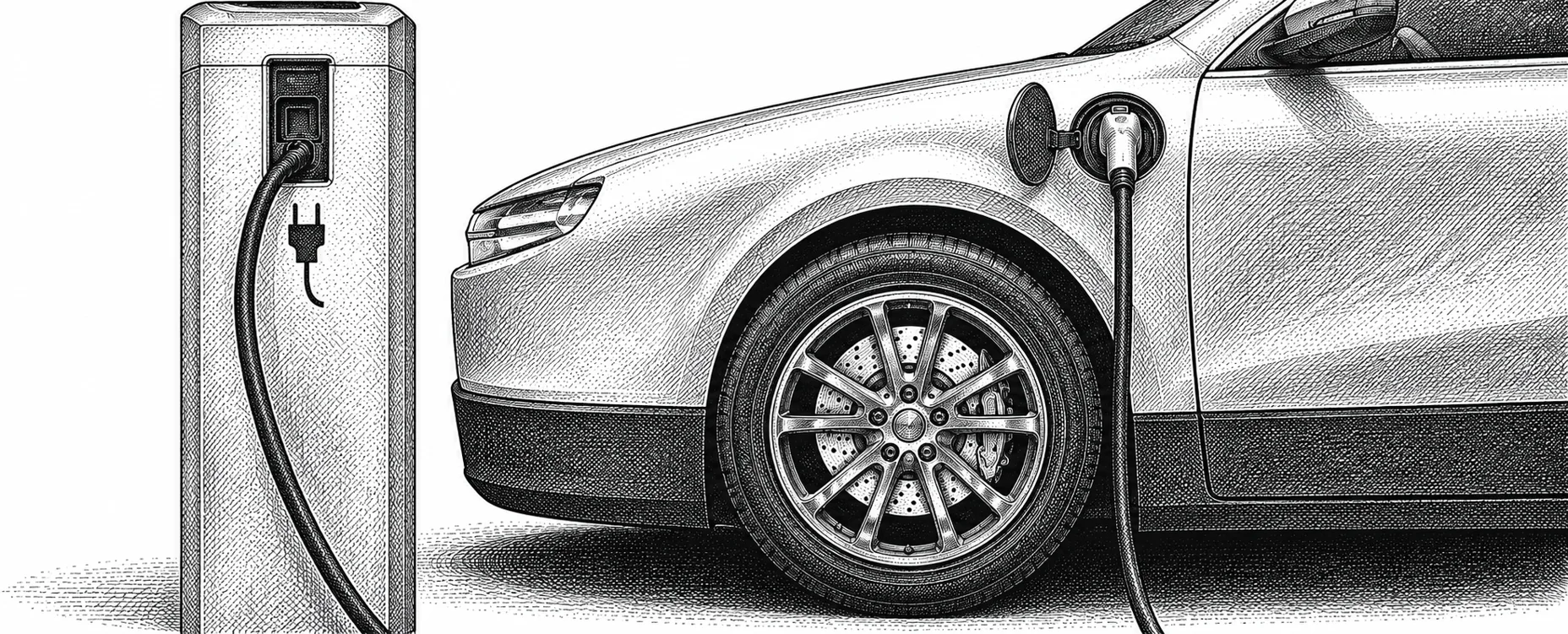
A car is the largest single load most houses will ever add. Charging one at 11 kW roughly triples a typical household’s draw, which is why the interesting features here are not app design but electrical: whether the charger can throttle itself, whether it can follow your solar production, and whether it can be scheduled into cheap hours.
The first thing to establish is your supply. Single-phase means one live conductor and caps you at about 7.4 kW no matter what the charger claims — buying a 22 kW unit for a single-phase house wastes money. Three-phase, common in the Netherlands, Belgium and Germany, allows the full 11 or 22 kW. Your electrician will also tell you the rating of your main fuse, and that number decides whether load balancing is optional or essential.
Load balancing is the one feature we would not compromise on. The charger watches total household consumption — via CT clamps or a P1 meter — and reduces its own current when the oven, shower and kettle come on together, instead of tripping the main fuse and leaving the house dark mid-charge. Without it, you are relying on nobody cooking while the car charges.
Single-phase tops out around 7.4 kW; three-phase allows 11 or 22 kW. Also find out your main fuse rating, because that is what determines whether load balancing is a nice-to-have or a requirement. An electrician can tell you both in five minutes.
Dynamic load balancing needs a live consumption signal. Some chargers include CT clamps; others read a P1 or HAN meter; a few need extra hardware bought separately. Confirm what is in the box rather than assuming the feature is self-contained.
Tethered means a fixed cable, which is convenient and one less thing to carry. Untethered means a Type 2 socket and you bring your own cable, which is tidier on a wall, easier to replace if damaged, and necessary if you have two cars with different plugs.
If you have panels, the charger should be able to consume only your excess generation rather than importing from the grid. Implementations vary a lot in how gracefully they handle a passing cloud, and this is where a good charger earns its price.
Look for residual current detection (which spots leakage to earth) and, in the UK and Ireland especially, PEN fault protection — which detects a broken combined neutral-and-earth conductor in the supply and removes the need for a separate earth rod in the ground.
Several chargers include a built-in 4G modem as a fallback, which matters because a charger is usually in the worst-covered part of the property. Ethernet is even better where a cable is possible.
| Brand | Model | Max output | Connector | Cable | Load balancing | Indicative price |
|---|---|---|---|---|---|---|
| amina | S | 22 kW | Type 2 | Tethered 6 m | Yes | €486 |
| Tesla | Universal Wall Connector | 22 kW | Type 2 | Tethered 7.3 m | Meter sold separately | €535 |
| Zaptec | Go | 22 kW | Type 2 | Untethered | Yes | €595 |
| NexBlue | Edge 2 | 22 kW | Type 2 | Untethered | Yes, up to 5 units | €595 |
| Peblar | Home | 11 kW | Type 2 | Tethered 5 or 7.5 m | Yes, via CT or P1 | €699 |
| Enua | Charge | 22 kW | Type 2 | Detachable | Yes | €740 |
| Easee | Charge Up | 22 kW | Type 2 | Untethered | Yes, per phase | €750 |
| go-e | Gemini Flex 2.0 | 22 kW | Type 2 | Untethered | Yes | €829 |
| Wallbox | Pulsar Max | 22 kW | Type 1 or 2 | Tethered 5 m | Yes | €899 |
| myenergi | Zappi | 22 kW | Type 2 | Either | Yes, plus PEN protection | €949 |
| Voltie | Charger | 22 kW | Type 2 | Tethered 5 or 7 m | Yes | €1150 |
Prices move constantly and vary by country, so we give an indicative band rather than a figure that would be stale within a month. Check the brand's own store for the current price.
The all-round pick. Easee reports current, voltage and power per phase with genuine accuracy, which means load balancing works properly rather than approximately, and your energy dashboard gets useful data rather than a rough total. The built-in mobile modem is more valuable than it sounds — chargers live on outside walls and in garages where Wi-Fi is weakest.
It is 22 kW on three-phase or 7.4 kW on single-phase, and remote current setting per phase makes it flexible in constrained installations. Budget for a cable, since none is included.
The charger to buy if you have solar panels. You can set a minimum proportion of green energy and the Zappi will wait for it, topping up from the grid only when you tell it to via boost mode. That is more sophisticated than a simple surplus-only mode, which stalls the moment a cloud passes.
PEN fault protection is the other reason it is popular, particularly in the UK and Ireland. A PEN fault is a break in the supply’s combined neutral-and-earth conductor, which can make earthed metalwork dangerous; detecting it in the charger avoids installing a separate earth rod in the ground, saving real money on installation.
The Dutch pick, and the one with the best local control story: an Ethernet port and a web interface served by the charger itself, so it does not depend on a manufacturer’s cloud to be configured or monitored. Load balancing can read either CT clamps or a P1 meter, which fits neatly with Dutch installations.
The onboard display showing energy, cost and tariff for the current session is genuinely useful and rare. Capped at 11 kW three-phase — which is enough for overnight charging of any car on the market, but worth knowing.
Norwegian, robust, and the sensible budget choice among established brands. The environmental monitoring is thorough — it watches its own temperature, current, earth leakage and internal humidity — which is reassuring for something bolted to an exterior wall in a Scandinavian winter.
One frustrating gap: the hardware contains an energy meter but the software does not yet expose the readings, so you cannot see consumption per session from the charger itself. Pair it with a household meter if that data matters to you.
The most automation-friendly charger here. Being able to switch between single-phase and three-phase charging under software control is unusual and genuinely useful with solar: single-phase at low current follows a small surplus gracefully, then switches to three-phase when there is plenty to go around.
It is also portable, well sealed and rated for real cold. RFID tags let it recognise different cars and vary behaviour accordingly — useful in a two-car household with different charging needs.
Well built, well finished and the only one here still offering Type 1 — the older, five-pin connector used by early Japanese and American EVs. If you run a first-generation Leaf or an older plug-in hybrid, that matters and almost nothing else on this list will help you.
IK10 is the highest common impact rating, which is worth having on a charger in a shared or commercial car park where things get knocked.
Do not be put off by the badge — the Universal version has a Type 2 connector and charges any modern electric or plug-in hybrid car. It is well made, generously cabled and priced below most rivals.
Tesla owners get extra control, including locking and unlocking the charge port and reading battery status. The catch is that the energy meter needed for load balancing is not included and has to be bought and fitted separately, which erodes the price advantage.
The interesting outlier: the only Zigbee charger here, which means it joins your existing mesh network rather than adding a Wi-Fi client in the least convenient part of the property. Slim, cheap and well protected.
The fixed 6 m cable is not user-replaceable, which is the thing to weigh — a damaged cable on a tethered charger elsewhere is an inconvenience; here it is a service call.
A strong specification for the money, and the one to look at for two cars or a small shared installation, since it balances load across up to five units rather than just protecting the house fuse from one. Ethernet, Wi-Fi and a built-in 4G eSIM cover every connectivity situation, and the off-peak scheduling and solar surplus modes are both present.
How much power can your house actually deliver? A 22 kW charger on a single-phase supply will charge at 7.4 kW, because that is all one phase can carry. Establish whether you have single- or three-phase, and what your main fuse is rated at, before comparing any products. The answer may also be that your connection needs upgrading, which is a conversation with your grid operator rather than a shopping decision.
Do you need 22 kW at all? Almost nobody does at home. At 11 kW a typical 60 kWh battery goes from nearly empty to full in about six hours — comfortably overnight. Many cars cannot accept more than 11 kW of alternating current anyway, because the limit is the onboard charger in the vehicle, not the wallbox. Paying for 22 kW frequently buys nothing.
Where will the consumption signal come from? Dynamic load balancing needs to know what the rest of the house is doing. If your charger reads a P1 meter, remember that the port is a single socket and something else may already be using it — some dongles pass it through, which avoids an awkward choice.
Almost certainly not. 22 kW requires a three-phase supply, and most cars cannot accept more than 11 kW of AC anyway because the limiting factor is the charger built into the vehicle. At 11 kW a typical 60 kWh battery charges from nearly empty in about six hours, which is well within a night.
The charger monitors your household’s total consumption and reduces its own current when other appliances draw heavily, so the main fuse is never exceeded. Without it, running the oven, shower and car charger together can trip the main fuse and cut power to the whole house. It needs a live consumption signal, from CT clamps or a P1 meter.
Tethered is more convenient day to day and means you always have a cable. Untethered looks tidier, lets you replace a damaged cable cheaply, and copes with two cars using different connectors. Note that several untethered chargers ship without any cable at all, so add that cost when comparing.
No. A charge point is a permanently connected high-current circuit, and in most countries installation is legally restricted to qualified electricians and must be notified to the grid operator. Get installation quotes before buying, because installation often costs more than the charger itself.
A PEN fault is a break in the supply cable’s combined protective-earth-and-neutral conductor, which can leave earthed metalwork at a dangerous voltage. Chargers with built-in PEN fault detection remove the need to install a separate earth rod in the ground, which saves significant installation cost. It is particularly relevant in the UK and Ireland.
More terms in the smart home glossary. Related questions: What should I look for in a smart EV charger?