Best Buys › Smoke & CO Detectors
Smoke & CO Detectors
The one category where the alarm matters far more than the app.
Best Buys › Smoke & CO Detectors
The one category where the alarm matters far more than the app.
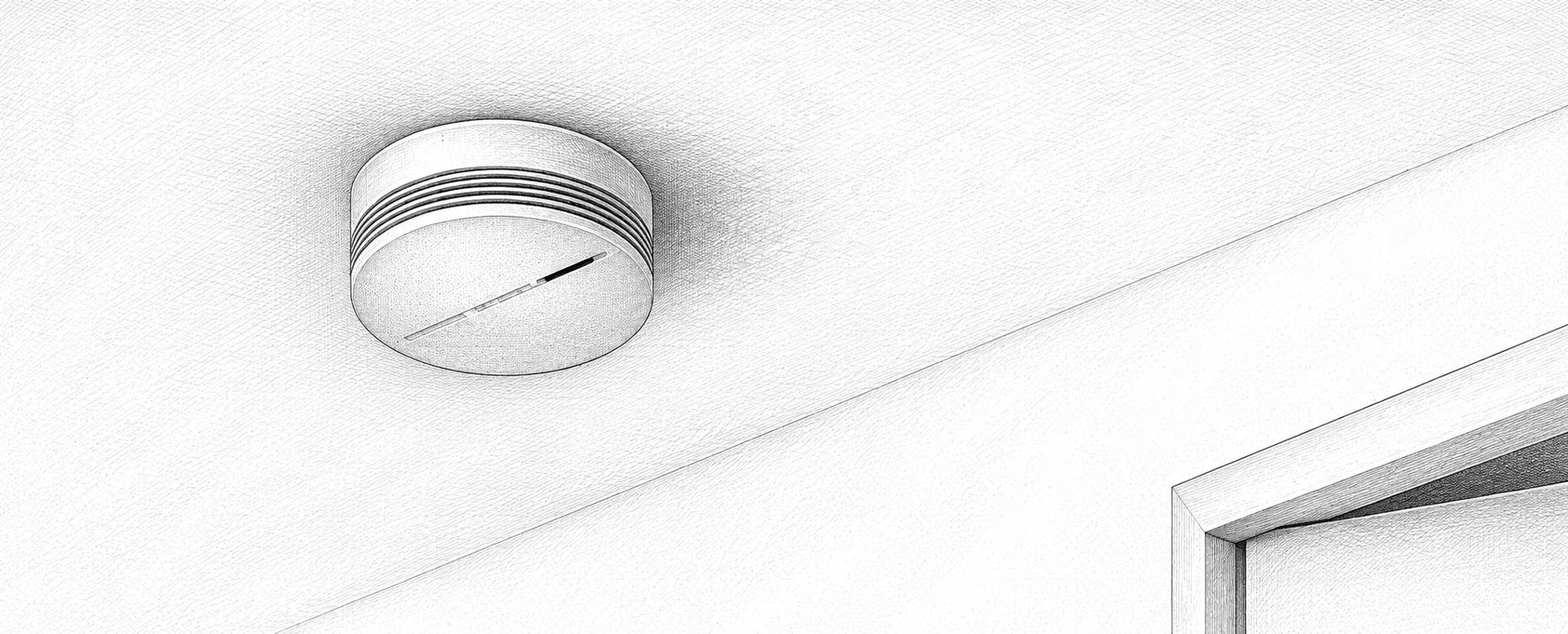
Carbon monoxide is colourless, odourless and tasteless. It is produced whenever a fuel burns incompletely — a blocked flue, a badly serviced boiler, a charcoal barbecue brought indoors, an engine running in an attached garage — and the early symptoms are headache and nausea that people mistake for flu. A CO alarm is not a smart home accessory. It is life-safety equipment that happens to be able to send a notification.
That framing should drive the whole purchase. Buy for the alarm first: a loud siren, a sensor appropriate to the risk, and compliance with the standards your country requires. Treat the connectivity as a valuable bonus, because it genuinely is — a detector that tells you the house is filling with smoke while you are at work, or that turns on every light and unlocks the escape route, is meaningfully better than one that just screams at an empty hallway.
One thing we would say plainly: a smart detector should supplement, not replace, properly installed interlinked mains-powered alarms where your building regulations require them. Adding smart units alongside is excellent practice. Removing hard-wired alarms to fit battery smart ones is a bad trade.
For CO, an electrochemical sensor is the benchmark for accuracy and longevity. For smoke, photoelectric (optical) sensors respond best to slow, smouldering fires — the type most likely to start at night from furniture or wiring. Heat sensors suit kitchens where smoke alarms nuisance-trip.
Several of these are smoke-only. If you burn gas, oil, wood or charcoal anywhere in the building, or have an attached garage, you need CO detection specifically — a smoke alarm will not detect it.
Interlinking means one detector sounding triggers all of them, so an alarm in the cellar wakes you upstairs. This is the single most important feature for whole-house safety, and two popular smart brands cannot do it at all.
85 dB at three metres is the standard and is loud enough to wake a sleeping adult. Flashing lights help anyone hard of hearing and make the source easier to find in smoke.
Detectors expire. The sensor degrades and most are certified for ten years, after which the whole unit must be replaced regardless of condition. Some use a sealed battery matching that ten-year life; others take replaceable CR123A cells lasting two to five years.
A large physical test button, a clear low-battery warning, and ideally the ability to trigger a test remotely. A detector nobody ever tests is a detector nobody knows has failed.
| Brand | Protocol | Smoke | CO | Interlink | Battery | Indicative price |
|---|---|---|---|---|---|---|
| Nexa | 433 MHz | Yes | No | Up to 12 units | AA, ~1 year | €20 |
| Trust | Zigbee | Yes | Separate unit | Via hub | CR123A, 10 years | €36 |
| frient | Zigbee | Yes | No | Via hub | CR123A, 3 years | €40 |
| Shelly | Wi-Fi | Yes | No | No | CR123A, 5 years | €45 |
| Fibaro | Z-Wave | Yes | Separate unit | Via hub | CR123A, 2 years | €53 |
| Sensereo | Matter over Thread | Yes | Same unit | Via hub | CR123A, 3 years | €70 |
| POPP | Z-Wave | Yes | Separate unit | Via hub | Sealed, 10 years | €70 |
| Netatmo | Wi-Fi | Yes | Separate unit | No | Sealed, 10 years | €90 |
| Heatit | Z-Wave | Yes | No | Via hub | Wired or 3 × CR123A | €156 |
Prices move constantly and vary by country, so we give an indicative band rather than a figure that would be stale within a month. Check the brand's own store for the current price.
The most complete single device here. One unit covers both hazards with the right sensor for each: photoelectric for smouldering smoke, electrochemical for carbon monoxide. The small display showing live CO concentration in ppm (parts per million) is unusually useful — it lets you see a slow rise long before an alarm threshold, which is exactly how a faulty flue behaves.
Matter over Thread means it works entirely on your local network with no cloud dependency, which is the correct architecture for a safety device. The cost per unit is high, so many households fit one where the risk is highest and cheaper smoke-only units elsewhere.
The best pure CO detector on the list. The electrochemical sensor is the accurate, long-lived type, and unusually you can define your own alert thresholds — so you can be told about a level that is well below the alarm point but still shouldn’t be there.
The sealed battery lasting the full certified ten-year life is the right design for safety equipment: nothing to forget, and the battery expiring coincides with the unit needing replacement anyway. Bulky, but it lives on a ceiling.
A well-engineered smoke alarm and the best value for whole-house smoke coverage. The photoelectric sensor responds to small quantities of smoke, and a built-in temperature sensor provides a distinct heat alarm — useful because a fast flaming fire raises temperature before it produces much visible smoke.
The remote test capability is the underrated feature: you can verify every alarm in the house from an automation rather than standing on a chair with a broom handle. No CO sensor, so pair it with a dedicated CO unit where you burn fuel.
Attractive, well made, and the sealed battery correctly matches the mandatory ten-year replacement cycle. Integration is deliberately simple — each unit reports as a triggered or not-triggered sensor, which is fast and hard to get wrong.
The limitation is serious enough to name in bold: these cannot interlink. One sounding will not sound the others. In a single-storey flat that may be acceptable; in a house, an alarm in the cellar that cannot wake you upstairs is a real gap. You can bridge it with an automation that sounds other devices, but that depends on your network being up.
Solid, well-integrated Z-Wave detectors with the useful addition of a temperature sensor that raises a distinct heat alarm. The 85 dB siren is standard. The two-year battery life on a CR123A is the shortest here, which across six detectors means a recurring task — set a reminder, because a flat detector is worse than no detector in that you believe you are covered.
An unusual device: a smoke alarm that is also a motion sensor and a controllable siren. That means one ceiling unit contributes to fire safety, presence detection and your alarm system, and the wired version never needs a battery change. If you are building a security layer as well as a fire one, the combination is efficient. No CO sensor.
Inexpensive and well specified for what it is, with a battery life so long that you will likely change it once in the device’s certified lifetime. Like Netatmo, though, these units cannot interlink, which limits them to supplementary coverage rather than forming a whole-house system on their own.
The interesting budget option, and the only one on this list that interlinks without depending on a hub — up to twelve units talk directly to each other over 433 MHz. Better still, the one that detected the smoke sounds a different tone, so you know where to go. That long range also makes it practical for a garage, shed or greenhouse. Annual battery changes are the price.
Smoke alarms belong on the ceiling, in the middle of the room where possible, and at least 300 mm from walls and light fittings. Fit one on every storey, in hallways and landings, and in any room where a fire could start unnoticed. Avoid kitchens and bathrooms for smoke alarms, where cooking and steam cause nuisance alarms — a heat alarm is the correct device for a kitchen.
CO alarms follow different rules, because CO mixes with air rather than rising like smoke. Fit them in the same room as any fuel-burning appliance, roughly at head height and one to three metres horizontally from the appliance, plus one in bedrooms or hallways where people sleep. Do not put a CO alarm directly above a boiler or inside a cupboard.
Requirements differ by country and by whether you own or let the property. In England, for example, rented homes require a smoke alarm on every storey and a CO alarm in any room with a fixed combustion appliance. Check your national rules rather than assuming, and look for compliance with the relevant standard — EN 14604 for smoke alarms and EN 50291 for CO alarms in Europe.
You need a separate CO sensor. Smoke alarms detect particles; carbon monoxide is an invisible gas that a smoke sensor cannot see at all. If anything in the building burns gas, oil, wood, coal or charcoal, or you have an attached garage, fit dedicated CO detection. Sensereo’s MSC-1 combines both in one unit; most other brands sell separate devices.
We would not do it. Where building regulations require interlinked mains-powered alarms, treat smart detectors as an addition rather than a substitute — they add remote alerts and automation, which is genuinely valuable, but a battery device on your Wi-Fi is not a like-for-like replacement for hard-wired life-safety equipment.
Interlinked detectors all sound when any one of them detects something, so an alarm in the cellar wakes you on the top floor. It is the most important feature for whole-house safety. Nexa units interlink directly with each other; Zigbee and Z-Wave models interlink through your hub. Netatmo and Shelly cannot interlink at all.
About ten years, regardless of the battery. The sensing element degrades over time, and most units are certified for a ten-year service life after which the whole detector must be replaced. Some models use a sealed battery matched to that life, which conveniently means one decision rather than two.
In the same room as any fuel-burning appliance, roughly at head height and one to three metres horizontally away from it, plus one near sleeping areas. Carbon monoxide mixes with air rather than rising, so ceiling placement is not required as it is for smoke. Do not mount one directly above a boiler or inside a cupboard.
More terms in the smart home glossary. Related questions: Is a smart smoke alarm still a proper smoke alarm?