Catching appliance failures before they happen
Most appliances announce their failure first — longer cycles, higher current, more frequent running. None of it is visible without measurement.
Most appliances announce their failure first — longer cycles, higher current, more frequent running. None of it is visible without measurement.
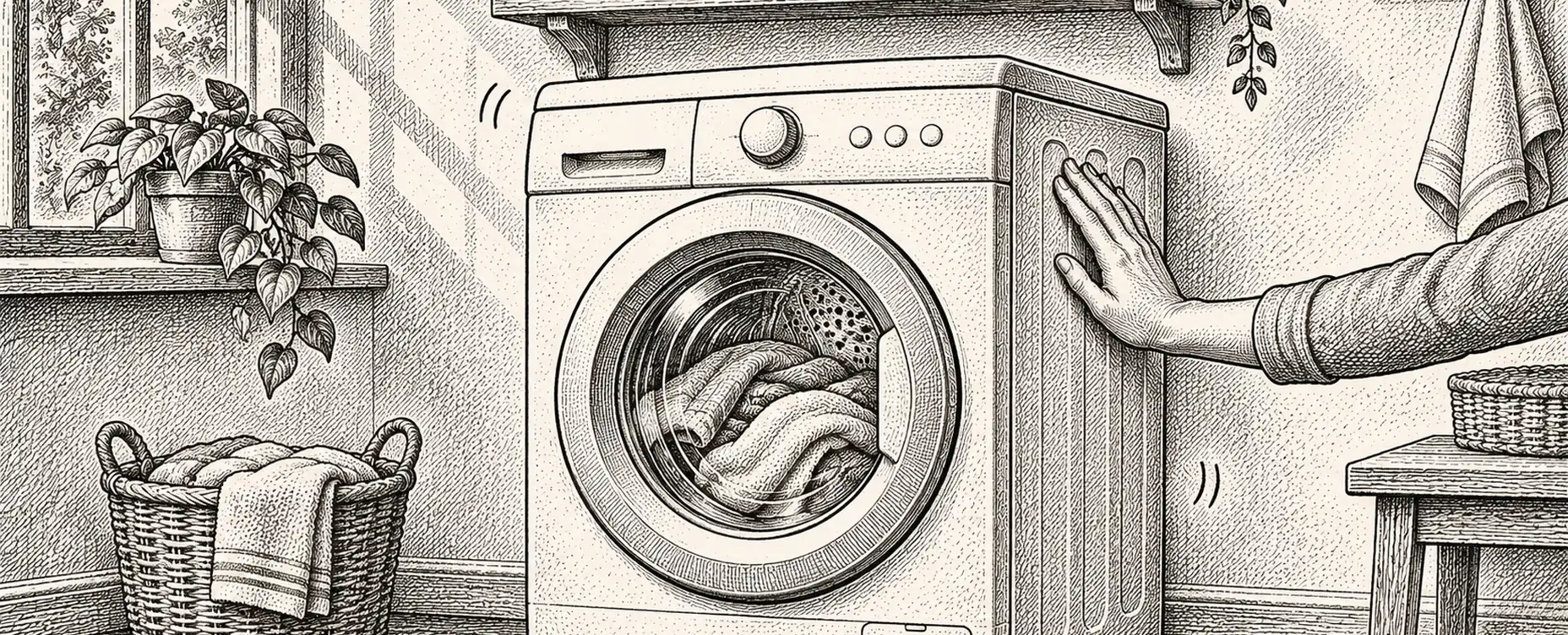
Appliances fail, and most of them announce it first. A freezer takes longer to reach temperature, a washing machine draws more current, a boiler cycles more often, a pump runs when it should be idle. None of that is visible without measurement, which is why appliances usually seem to fail suddenly.
Catching the signal early converts an emergency into a scheduled repair, and it is one of the more genuinely useful things a connected home does.
Most automation is built around things happening. The best appliance monitoring is built around things not happening.
A freezer that stops cycling has failed, and you will not know until food thaws.
A heating system that never fires on a cold night has locked out.
A sump pump that never runs during heavy rain is either not needed or not working, and you would rather know which.
A dehumidifier that switched itself off weeks ago is doing nothing about your damp problem.
A ventilation fan drawing no power has failed silently, and nobody notices a fan that is not running.
These alerts are slightly awkward to build, because you are asserting that something should have happened within a window. They are also the ones that catch real faults, so they are worth the effort.
Cycle duration. How long something takes to do its job is the clearest degradation signal there is. A freezer's compressor running longer for the same temperature, a hot water cylinder taking longer to reheat, a dishwasher cycle stretching — all indicate that something is working harder than it did.
Duty cycle. The proportion of time a device spends running. A fridge normally runs perhaps 30 to 50 per cent of the time depending on ambient temperature; a fridge running 80 per cent of the time has a seal, a door, a fan or a refrigerant problem. Track it against outdoor temperature so you compare like with like.
Peak current draw. A motor drawing more current at startup than it used to suggests bearing wear or a stiffening mechanism.
Standby power changes. A jump in idle consumption often indicates a failing power supply or a control board fault.
Temperature differentials. The gap between flow and return on a heating system, or between a freezer's set point and its actual reading, both drift as things degrade.
Vibration. A washing machine or pump running rougher than before, detectable with a cheap accelerometer sensor, indicates bearing or mounting problems well before the noise becomes obvious.
Water pressure or flow. A gradual decline points to scale, a blocked filter or a failing pump.
None of these measurements means anything without knowing what normal looks like.
So the method is: measure for a month before setting any thresholds, and expect normal to vary with season, load and use. A freezer in a garage behaves completely differently in January and July, and a threshold set in winter will alarm all summer.
Two practices make this manageable. Compare against the same period last year where you have the data, which handles seasonality naturally. And alert on rate of change rather than absolute value — a reheat time 30 per cent longer than last month is meaningful regardless of what the absolute figure is, and it survives seasonal drift far better than a fixed number.
Keep the alert thresholds loose at first. An alert that fires spuriously three times gets ignored, and a monitoring system nobody trusts is worse than none, because it provides false reassurance.
Fridge and freezer. A metering plug for duty cycle plus a probe temperature sensor inside — a probe on a lead, with the radio outside, since a metal box blocks radio badly. Alert on temperature above threshold, on no compressor activity for several hours, and on duty cycle well above baseline.
Washing machine and dishwasher. Metering plug. Alert on cycle duration increasing markedly, on failure to complete, and on unusual peak draw.
Boiler or heat pump. Ideally a clamp on the circuit plus flow and return temperature. Alert on failure to fire when heat is demanded, on unusually short cycling, and on a rising gap between the temperature demanded and achieved.
Hot water cylinder. Temperature top and bottom, plus energy in. Reheat duration trending upward suggests scale on the element or a failing coil.
Pumps — heating, sump, pool, borehole. Run hours, current draw and vibration. Pumps are the components most likely to fail and easiest to monitor.
Ventilation and extract fans. Simply whether they draw power when they should. Silent failure is the norm here.
Anything with a filter. Track run hours and prompt replacement, because a blocked filter degrades performance long before anyone notices.
An alert nobody acts on is noise, so decide the response when you build the rule.
Urgent and automatic: a leak closes the water valve, a freezer failure notifies immediately and loudly, a smoke alarm does its thing regardless.
Urgent and human: heating failure in cold weather, no hot water, a pump not running during rain. Notify clearly, once, with the specific fault named.
Not urgent, worth scheduling: degradation trends, filter life, rising cycle durations. These belong in a weekly digest rather than a push notification, and a digest is the format most people will actually read.
Informational: energy figures and long-term trends, which belong on a dashboard you look at when you choose to.
Sorting alerts into those four buckets is what keeps a monitoring system trusted over years, and getting it wrong is why most people mute their smart home notifications within a month.
Being fair about limits.
It does not predict sudden failures — a snapped belt, a failed control board, a burst hose. Those give no warning, which is why leak sensors and shut-off valves matter alongside monitoring.
It does not diagnose. It tells you something changed, not why. That is still a great deal more than you had.
It does not replace servicing. Gas appliances need professional inspection on schedule regardless of what the data says, and that is a safety matter rather than an efficiency one.
And it needs someone to look occasionally. A dashboard nobody opens and alerts nobody reads is an expensive way to feel prepared.
Step four is the discipline that makes the rest work, and step five catches the faults that matter. A freezer that stopped is worth more to know about than any efficiency figure you will ever collect.