Entrance access for a building with forty tenants
The most used and least managed equipment in any block. Replacing keys is the highest-value change available to a managing agent, and the difficulty is administrative rather than technical.
The most used and least managed equipment in any block. Replacing keys is the highest-value change available to a managing agent, and the difficulty is administrative rather than technical.
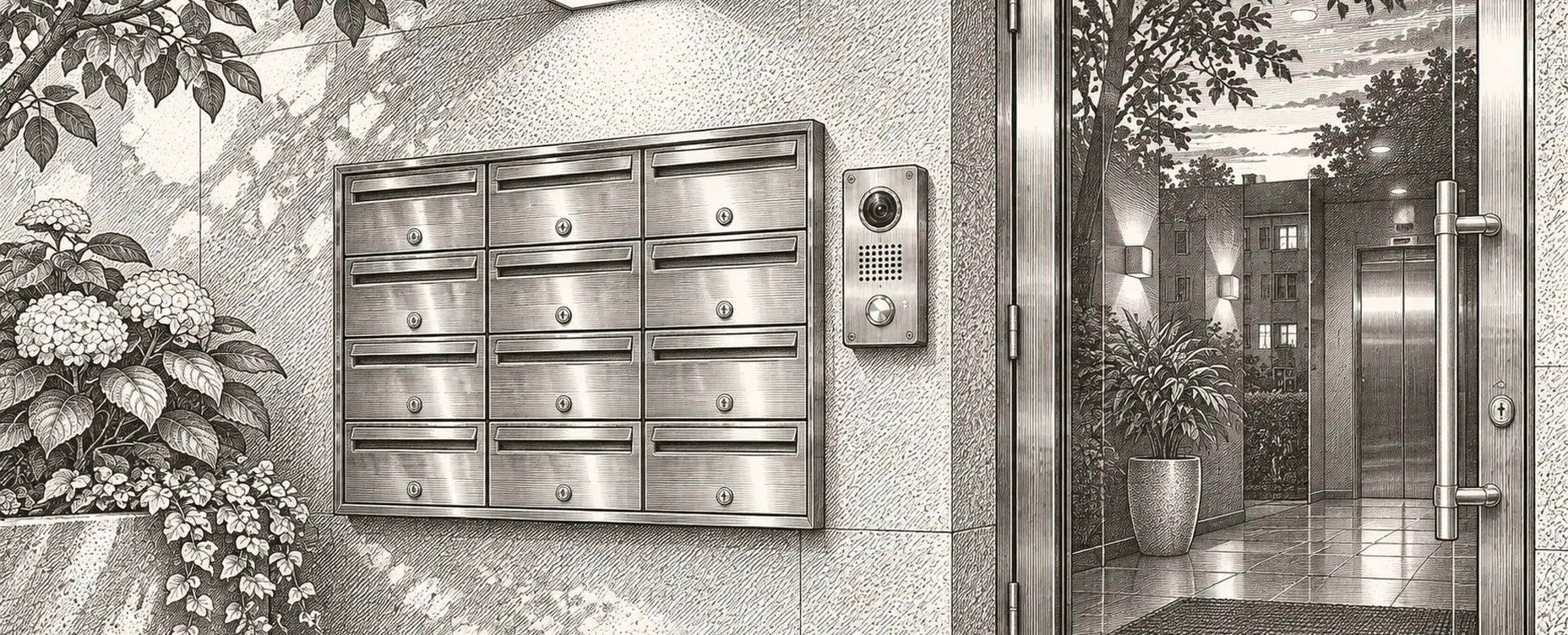
The entrance is the most used and least managed piece of equipment in an apartment building. Every resident, every visitor, every courier and every contractor passes through it, several times a day, for decades. And in a great many buildings it is still controlled by a physical key that has been copied an unknown number of times since the block was built.
Replacing that is the single highest-value technical change available to a managing agent, and the difficulty is almost entirely administrative rather than technical.
In a house, a key you cannot revoke is a manageable risk. In a building of forty apartments with a decade of tenant turnover, it is not.
The arithmetic is uncomfortable. Forty apartments, each turning over every three years, is roughly thirteen changes of occupant a year. If each occupant held two keys and a proportion were never returned, the number of unaccounted keys after ten years is substantial. Nobody knows the figure, which is itself the problem.
Re-keying a communal entrance is expensive and requires distributing new keys to every resident simultaneously, which is why it almost never happens. So the risk compounds indefinitely.
Three properties matter, and any system that has them is a substantial improvement regardless of brand.
Individually issued credentials. Each resident, each cleaner, each contractor holds something identifiable, so it can be revoked on its own without affecting anybody else.
Instant revocation. A departing tenant's access ends when their tenancy does, from an office, without visiting the building.
A usable log. Enough record to investigate an incident, without becoming a surveillance system. We return to that distinction below because it matters.
The default, correctly. Cheap enough to issue two per apartment and replace when lost, no phone dependency, instantly revocable, and understood by everybody including elderly residents and children.
The one specification to insist on is encrypted credential technology. Older unencrypted formats can be cloned with equipment costing very little, which defeats the entire purpose. Ask the supplier explicitly which technology is used, and treat a vague answer as disqualifying.
Convenient and increasingly expected, especially by younger residents, and it should be an option rather than the only method. Phones are flat, forgotten, updated and broken, and a resident locked out of their own building at midnight is a serious service failure. Offer it alongside fobs.
Useful for time-limited contractor access and poor as a resident credential, because a communal door code becomes universally known within months and is never changed.
Separate from access control and worth treating as such. Its job is letting residents identify and admit visitors, and modern IP intercoms that reach a resident's phone solve the perennial problem of deliveries arriving when nobody is home. In a retrofit, an IP system usually replaces a wiring problem with a network problem, which is generally the easier of the two.
This is where systems succeed or quietly rot, and it is almost entirely process rather than product.
Record which credential went to which apartment and which named person, with a date. A drawer of unlabelled fobs is functionally the same as a set of copied keys.
Put credential revocation on the tenancy-end checklist alongside returning keys and reading meters. This single item is the difference between a controlled building and an uncontrolled one, and it costs nothing.
Have a defined process and a charge. Residents report a lost fob promptly when it is easy and cheap; they do not report it when it involves an awkward conversation.
Time-limited credentials that expire on their own. A contractor fob issued for a two-week job and never returned is the most common leak in otherwise well-run buildings.
Fire services, ambulance crews and utility engineers need access, and in many jurisdictions there are established arrangements for this — a key safe with a standardised lock, or a specific override. Find out what applies locally and provide for it properly rather than discovering the gap during an emergency.
Couriers will find a way in whatever you install — usually by following a resident or being buzzed in by whoever answers. A parcel room or lockers with their own controlled access is the honest solution, and it also solves the doorstep theft that generates complaints.
An access log records where identifiable people were and when, which makes it personal data in the EU and UK with all the obligations that follow.
State the purpose narrowly: building security and safety. Then hold to it. Using entry records to infer whether a tenant is subletting, how often they are home, or who visits them is a different purpose, is almost certainly unlawful without a fresh legal basis, and would destroy tenant trust permanently if discovered.
Set a retention period and delete on schedule. A few months is usually ample for incident investigation. An indefinite archive of every resident's movements is a liability rather than an asset.
Restrict access to named individuals with a business need, and log who queries it.
Tell residents what the system records, why, and how long it is kept. Transparency here is cheap and prevents the suspicion that otherwise attaches to any new system.
Existing wiring is often unusable. Old intercom cabling may be two-core, damaged or undocumented. IP systems over new cable or existing network infrastructure are frequently cheaper than diagnosing the old wiring.
You will need resident agreement, and possibly a formal decision. Depending on the ownership structure, communal alterations may require a vote at a residents' meeting or a specific majority. Establish what is required before promising a timescale.
Phase the changeover. Run new credentials alongside existing keys for a defined transition, then decommission the old cylinder. A hard cutover in a building of forty households produces a difficult week.
Expect the first fortnight to be busy. Budget time for lost fobs, confused residents and one door that needs adjusting. It settles quickly.
Steps four and five are the ones that matter in five years. The hardware will still be working; whether anybody knows who holds a credential is entirely a matter of whether someone kept the register.