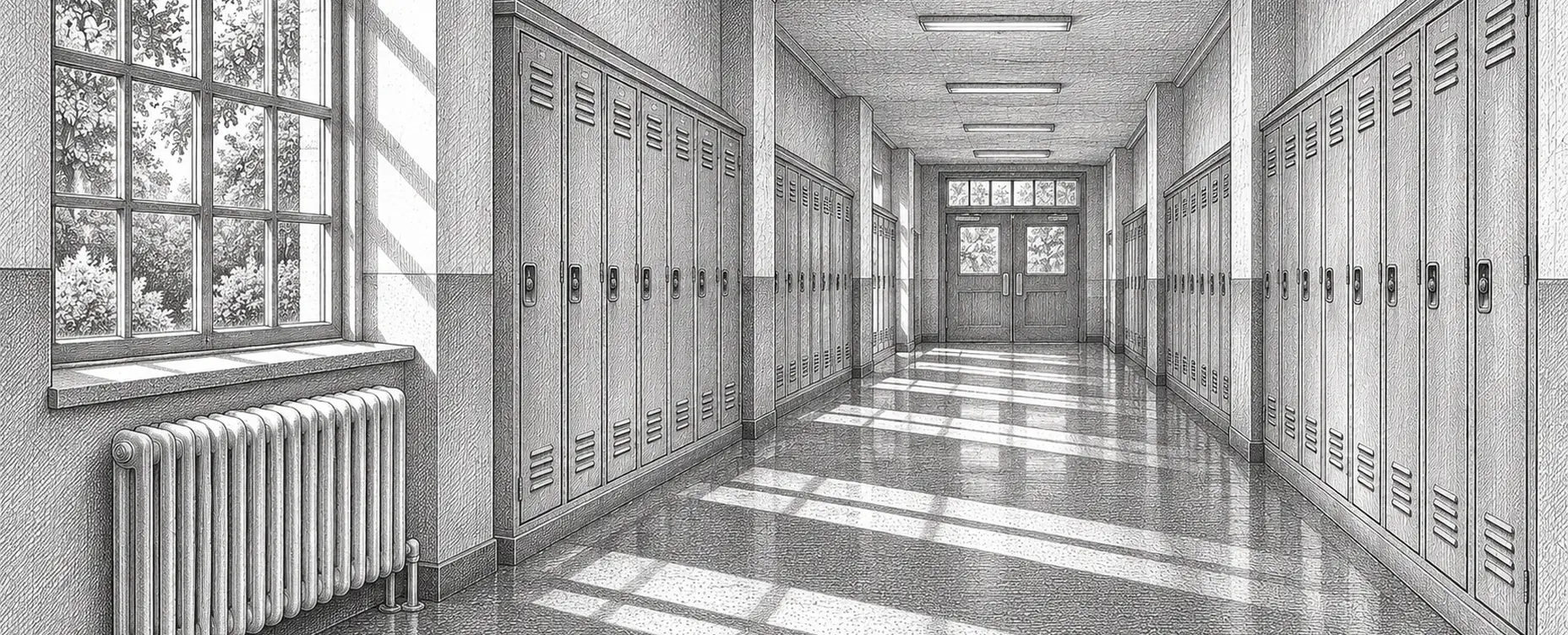
A school is one of the strangest buildings to heat. It is intensively occupied for roughly six hours a day, thirty-nine weeks a year, and empty for the rest — including two weeks in the depths of winter when the heating is frequently still running as though a full timetable were in progress.
Because the occupancy pattern is so extreme, the savings available from getting the schedule right are unusually large. And because school buildings are typically old, poorly insulated and heated by systems installed decades ago, the interventions that pay best are rarely the ones that involve new plant.
Start with when, not how much
The single biggest determinant of a school's heating bill is not the target temperature. It is the number of hours the heating runs. Which means the highest-value work is on the schedule, and it is mostly free.
The holiday problem
Every school year contains around thirteen weeks of holiday. If the heating runs on term-time settings through even part of that, the waste is enormous. The failure is almost never a decision; it is that changing the schedule requires somebody to remember, at the end of a busy term, to alter a controller in a plant room.
The fix is to load the academic calendar into the heating schedule once, including INSET days, half terms and the awkward partial weeks. A calendar-aware schedule removes an annual human dependency that fails reliably.
Frost protection, not off
Holiday setback does not mean switching heating off. Buildings need protection against freezing pipes, and unheated buildings develop condensation and mould that cost more than the fuel saved. A holiday setting of around 10 to 12 degrees is the usual approach — confirm the figure with whoever maintains the system, because it depends on the building and the pipework.
Optimum start
Rather than switching on at a fixed hour, calculate backwards from when the building needs to be warm, using outdoor temperature and how quickly this particular building heats. Many existing building management systems already have this feature and it is switched off or badly configured. It is worth an afternoon with whoever maintains the controls.
Match reality, not the timetable
Schools are used outside teaching hours — evening lettings, weekend sports, holiday clubs, cleaning and site staff. The answer is not to heat the whole building for a badminton club in one hall, but to zone it so out-of-hours use heats only what is used. Getting this right is frequently worth more than any other single change.
Zoning: where the real money is
Most school heating is divided into a small number of large zones, so heating one occupied room means heating a wing. Finer zoning is the intervention with the largest structural saving, and it is also the most expensive, which makes evidence important before spending.
The cheap version of that evidence is temperature sensing per room for a term. It will typically show three things: some rooms consistently overheated while others are cold, corridors heated to classroom temperature for no reason, and whole areas heated during periods when nobody was in them. Each of those is a specific, costed intervention rather than a general aspiration.
Where full zoning is out of reach, smart radiator valves on individual radiators are a partial substitute. They will not stop a boiler firing for one room, but they stop individual rooms overheating and let unused rooms sit cooler. In an old building with no zoning, this is often the pragmatic first step.
Overheating is a real problem too
Schools tend to be discussed as cold buildings, and many are also badly overheated in specific places: south-facing classrooms in summer term, rooms next to plant, corridors on a communal circuit, and IT rooms with a lot of equipment and no cooling.
Overheating matters academically as well as for comfort — examinations happen in June — and it is usually cheaper to fix than heating problems. External shading and blinds, controlled to close on solar gain rather than by hand, do more than any cooling. And a room persistently above target while the heating is on is telling you the zoning or the valve is wrong, which is a fault worth finding.
Sports halls and swimming pools
Both deserve separate mention because they behave nothing like a classroom. A sports hall has an enormous volume, is used intermittently, and is frequently the single largest heating load on a school site. Heating it on a general schedule rather than to actual bookings is one of the more expensive habits in school estates management, and linking the heating to the lettings calendar is a straightforward and substantial win.
Pools are a different problem again. The dominant energy cost is usually evaporation from the water surface rather than space heating, which means a pool cover used consistently overnight saves more than any control change. Where a school has a pool, that is where the attention belongs, and it is worth getting specialist advice rather than treating it as another zone.
What else to measure while you are at it
Gas and electricity, with half-hourly data. Most schools have this available from their supplier and never look at it. The overnight and weekend baseline is where surprises hide: plant left running, immersion heaters, catering equipment, and a surprising amount of IT.
Hot water temperature. Cylinder and distribution temperatures matter for both energy and legionella control, and the latter is a legal duty in commercial buildings. Automated logging replaces a clipboard and provides a defensible record.
Boiler and plant room conditions. A temperature sensor and a leak sensor in the plant room cost very little and catch failures before they become floods.
Practical constraints in a school
The controls are frequently ancient. Many schools run building management systems from the 1990s that are functional but opaque, sometimes with nobody on site who understands them. A Modbus or BACnet gateway can often expose that plant to modern software without replacing it, which is dramatically cheaper than a new BMS.
Access is limited. Work happens in holidays, which means planning a term ahead.
Everything gets touched. Devices in reach of students need to be robust and, ideally, boring-looking. Sensors in classrooms should be mounted high and be uninteresting.
Networks are locked down. School networks are heavily managed for good safeguarding reasons, and adding devices means working with the IT provider from the start rather than presenting them with a fait accompli. Ask early about a separate VLAN for building devices; it is usually the answer that satisfies everybody.
Where to start, in order of return
- Load the academic calendar into the heating schedule, with a frost-protection setback. Free, and frequently the largest single saving available.
- Check whether optimum start exists and works. Often it is present and disabled.
- Read your half-hourly energy data and identify the overnight and weekend baseline.
- Temperature sensors in every teaching space for a term, to find the overheated and the cold.
- Radiator valves in the rooms the data says are overheated.
- Then build the capital case for zoning, controls or fabric work, using a term of measurements rather than an assertion.
The first three cost nothing and are the ones most often left undone. That is the honest state of energy management in a great many school buildings, and it is why measurement before investment matters here more than almost anywhere.