Legionella gets mentioned often enough in passing — usually next to a hot water cylinder or a holiday cottage — that it is worth actually understanding what creates the risk, rather than treating it as vague background anxiety about plumbing. The reassuring news is that the conditions it needs are specific and mostly avoidable. The useful news is that automation is genuinely well suited to avoiding them.
What the bacteria actually needs
Legionella bacteria occur naturally in low numbers in many water sources and are not, by themselves, unusual or alarming. They become a hazard only when three conditions line up together: water warm enough for the bacteria to multiply — broadly the range between roughly 20 and 45 °C — stagnation that lets numbers build up over time rather than being flushed through, and a way to turn that water into a fine aerosol that can be inhaled.
All three, at once, is the requirement. Most ordinary domestic plumbing, used normally, rarely produces all three together for long enough to matter. The exposure route matters as much as the bacteria: legionella is a lung problem, not a stomach problem — drinking contaminated water is not considered a significant risk, because the bacteria need to be inhaled deep into the lungs as tiny droplets to cause illness, not swallowed.
Where it actually collects in an ordinary home
The places worth thinking about are specific, not general:
Rarely used bathrooms and guest rooms, where water can sit in the pipe run for weeks between uses, warming toward room temperature and stagnating the whole time.
Holiday homes and second properties, for the same reason at a larger scale — an entire system can sit idle and warming for months.
Hot tubs and spa baths left idle or under-maintained, which combine warm water, aerosol from the jets, and a large volume that is easy to under-treat.
Humidifiers and misting systems that hold standing water and actively aerosolise it — precisely the mechanism the bacteria need, so any that hold water for more than a day or two are worth taking seriously.
Cold water storage tanks, more common in older properties, where water can sit for longer than a fully mains-fed system and slowly warm in a loft space.
Notice what is not on this list: an ordinary kitchen tap or toilet in regular daily use. Regular flow is itself protective, because it prevents the stagnation the bacteria need.
Showers are the routine domestic exposure route
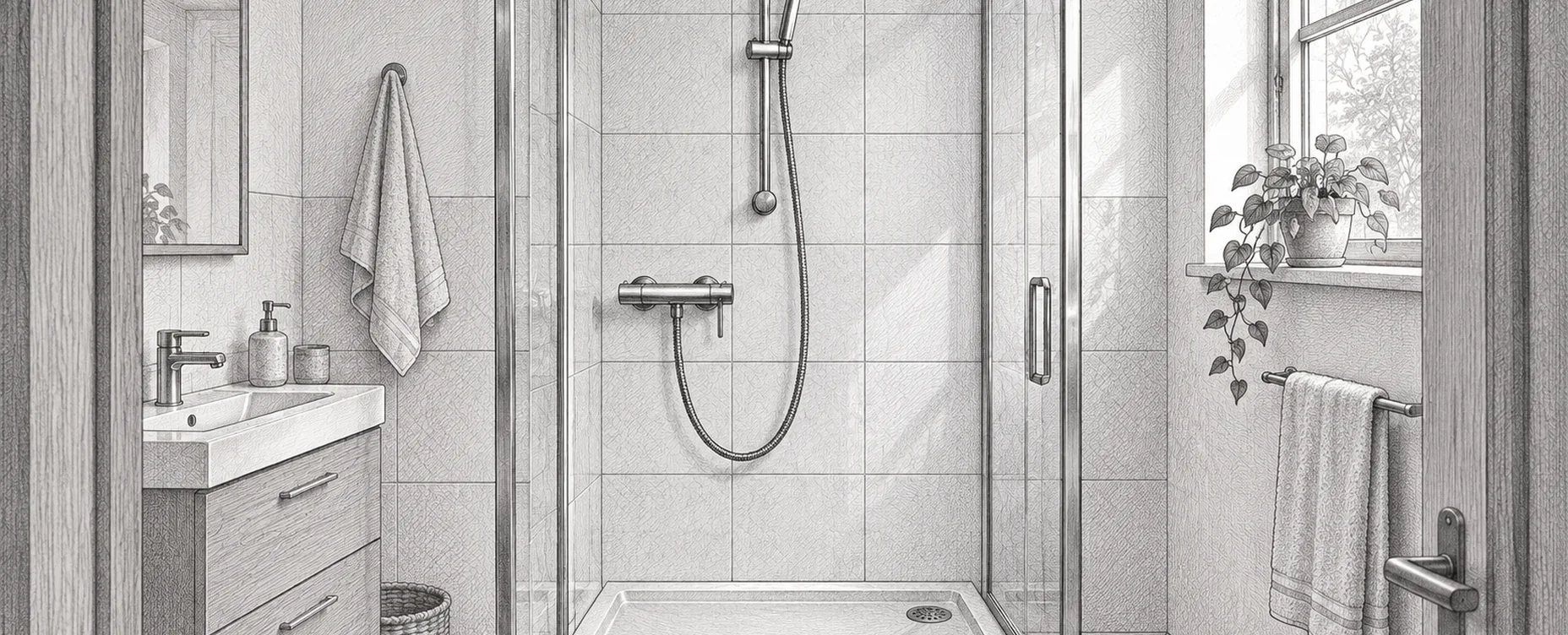
A shower does the one thing that turns a theoretical hazard into a real one: it takes water and forces it through a narrow head at pressure, producing exactly the fine aerosol that can be inhaled. A shower that has not been used for a week or more, in a system where the water sat warm in the interim, is the standard example used in guidance on this topic for a reason.
The practical response is almost absurdly simple: run an unused shower, at temperature, for a minute or two before anyone showers under it if it has been idle for more than roughly a week. This flushes stagnant water out ahead of the aerosol-producing part of the routine.
The two temperature rules
Two figures do most of the useful work, and both come from long-standing water-hygiene guidance rather than anything specific to smart home hardware:
Store hot water above about 60 °C. Legionella is killed within a short time at this temperature, which is why hot water cylinders are typically specified to store at this level even though it is hotter than anyone would want to shower in directly — a thermostatic mixing valve brings the temperature down to a safe level at the point of use, after storage has already done the killing.
Keep cold water genuinely cold, ideally below roughly 20 °C, which limits growth even if stagnation occurs. Cold pipework routed near a heat source — alongside a hot pipe, in a warm loft, near a boiler — can drift into the growth range without anyone noticing, which is worth checking for in an older installation.
What automation can actually do here
This is a case where sensing genuinely earns its cost, because the failure mode is invisible until someone gets sick, and automation removes the human forgetting.
A temperature sensor on the hot water cylinder can confirm it is actually reaching and maintaining storage temperature, catching a failing thermostat or heating element before it becomes a silent, months-long problem.
A scheduled flush routine for a rarely used outlet — a guest bathroom, a holiday home, an outside tap — run automatically on a weekly or fortnightly schedule, removes the dependency on someone remembering.
A simple reminder, if full automation of the outlet is not practical, is still meaningfully better than nothing: a notification to run the guest shower before visitors arrive is a low-effort habit worth building into a routine.
For a holiday home specifically, an arrival routine that runs every outlet at temperature before anyone occupies the property is a sensible standard practice, not an overreaction.
When to actually worry
The genuinely higher-risk situations are narrower than the general anxiety around the topic suggests: hot tubs and spa pools, particularly shared or infrequently serviced ones; large or complex plumbing systems more typical of commercial buildings than houses; and households with someone elderly, very young, or with a weakened immune system, where any respiratory infection carries more risk. An ordinary, regularly used family home with reasonable hot water temperatures is, for context, a low-risk environment — this is worth keeping in proportion rather than treating as a reason for alarm.
Landlords in a number of countries carry specific legal obligations to assess this risk for rental properties; if you are a landlord, checking your local requirements directly is more reliable than any general guidance, this article included.
A sensible plan
- Check your hot water cylinder's stored temperature and confirm it reaches roughly 60 °C, with a thermostatic mixing valve bringing it down for safe use at the tap.
- Identify any rarely used outlets — guest bathroom, outside tap, holiday home — and set a reminder or automation to flush them every one to two weeks.
- Add a temperature sensor to the cylinder if you want to stop relying on memory entirely.
- Service hot tubs and spa baths on the manufacturer's schedule, not an ad-hoc one.
- If you manage a rental property, look up your local legal obligations directly rather than assuming general guidance covers them.
None of this requires new anxiety about ordinary daily water use. It requires attention to the specific fittings that can sit warm and stagnant, which is a much smaller and more manageable list.